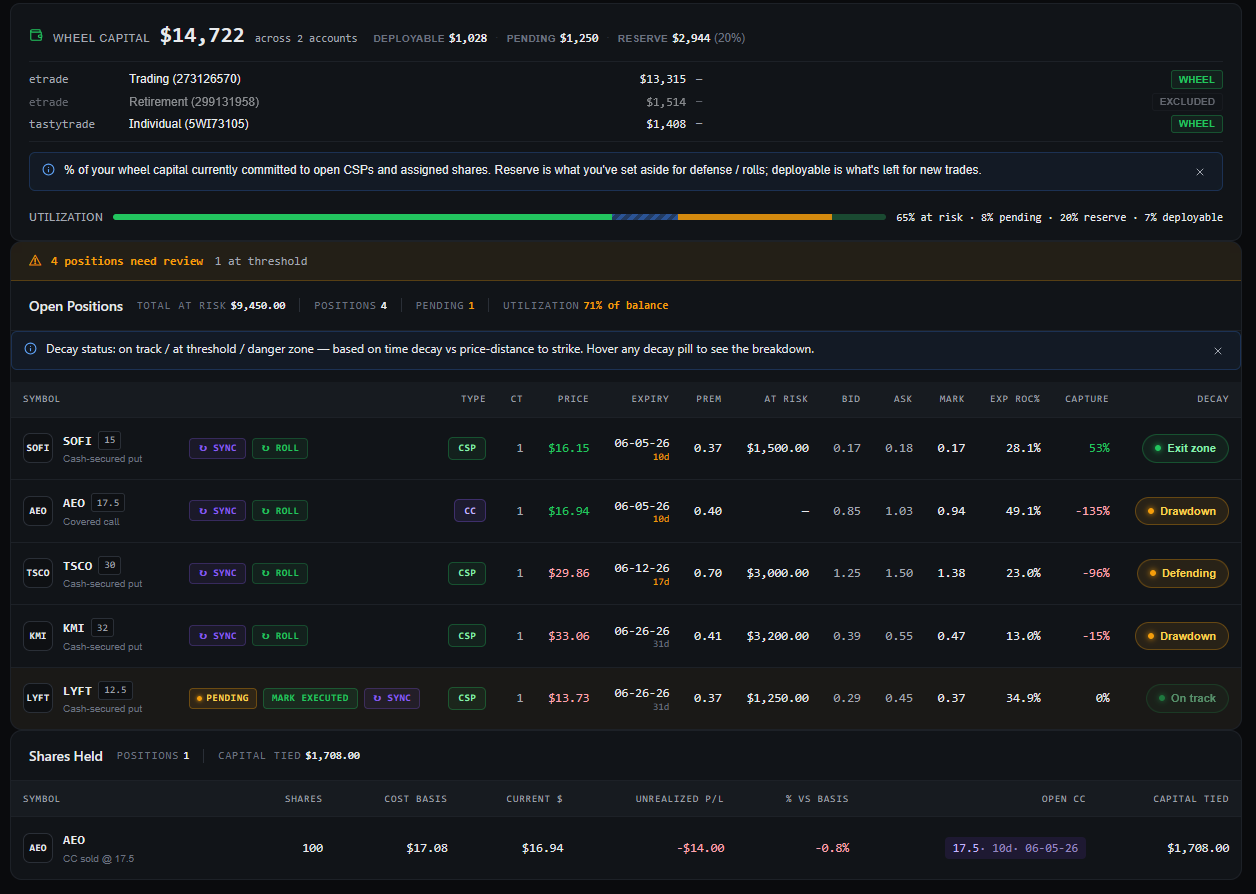
CSPtoCC tracks the full CSP → roll → assignment → CC lifecycle as one campaign with running cost basis. The Planning Board surfaces earnings clusters across your watchlist before entry. The decay visual grades every open position on capture % and DTE. Portfolio Return benchmarks your trading against buy-and-hold SPY — honestly. Smart Roll computes the next strike when it's time to defend. Built by a wheel trader who got tired of spreadsheets.
The features in CSPtoCC exist because each one is a scar. Built around the moments a generic trade journal can't see coming.
IV 76%, you take the trade, stock moves against you overnight. The premium was the warning sign, not the opportunity.
You stack CSPs across the month. You don't realize three names report on the same Tuesday until you're already in.
You roll a put, then roll again, then get assigned. The number in your spreadsheet stopped matching reality two legs ago.
Week before, target week, week after. Three strikes each. Mental math on annualized ROC. Every. Single. Trade.
Theta isn't linear. The last week burns faster than the first three. Looking at the percent in isolation is a lie.
Calendar-day rules say yes. Trading-day reality says it's the same wheel cycle. Your records shouldn't disagree.
No bloat. No paper-trading toys. Every screen is something a working wheel trader opens before, during, or after a fill — built and used daily by the person making it.
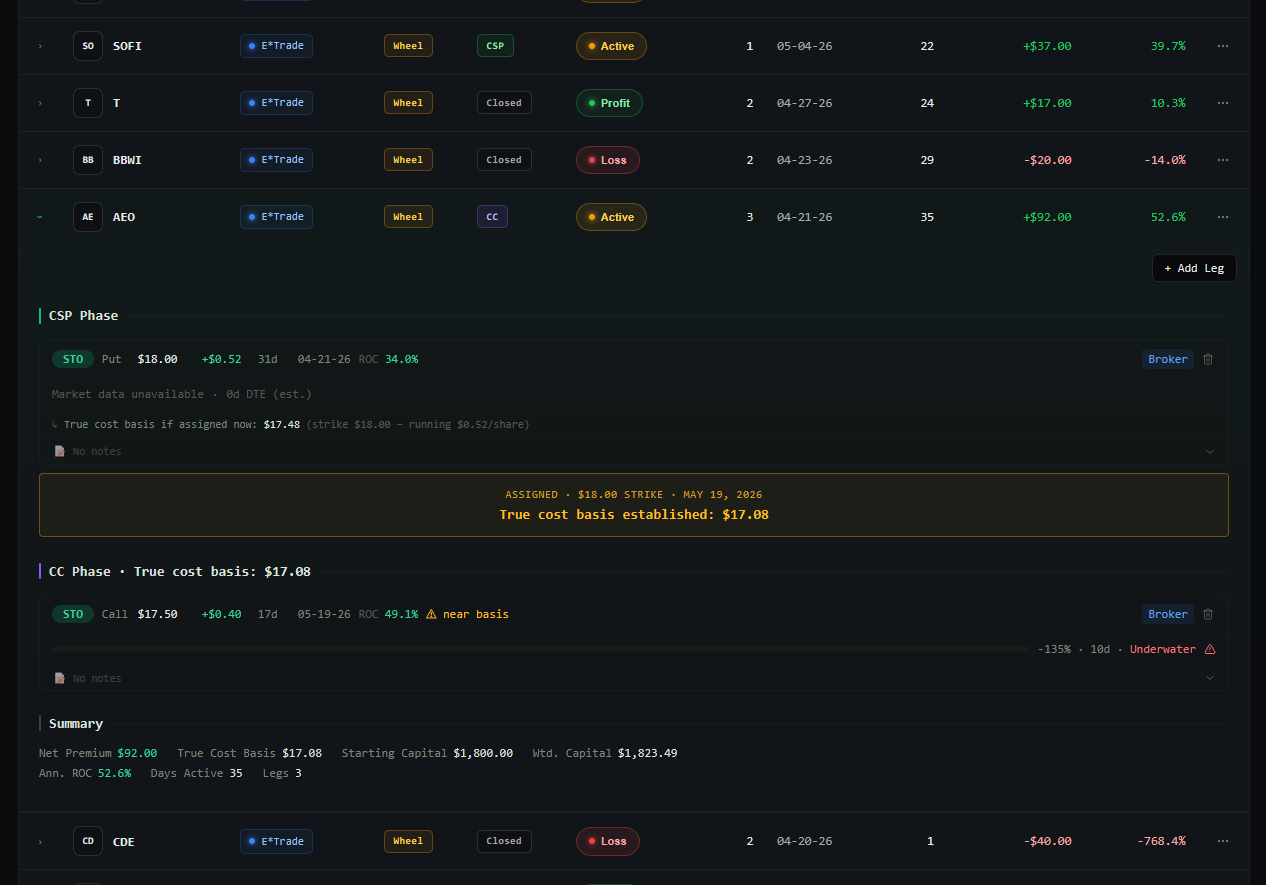
A CSP that rolls, gets assigned, then turns into CCs is one campaign. CSPtoCC threads every leg with running true cost basis, weighted capital, days active, and annualized ROC that reflects the whole cycle — not just the last fill. The assignment moment is a clear visual transition; the CC phase tracks its premium against the new cost basis.
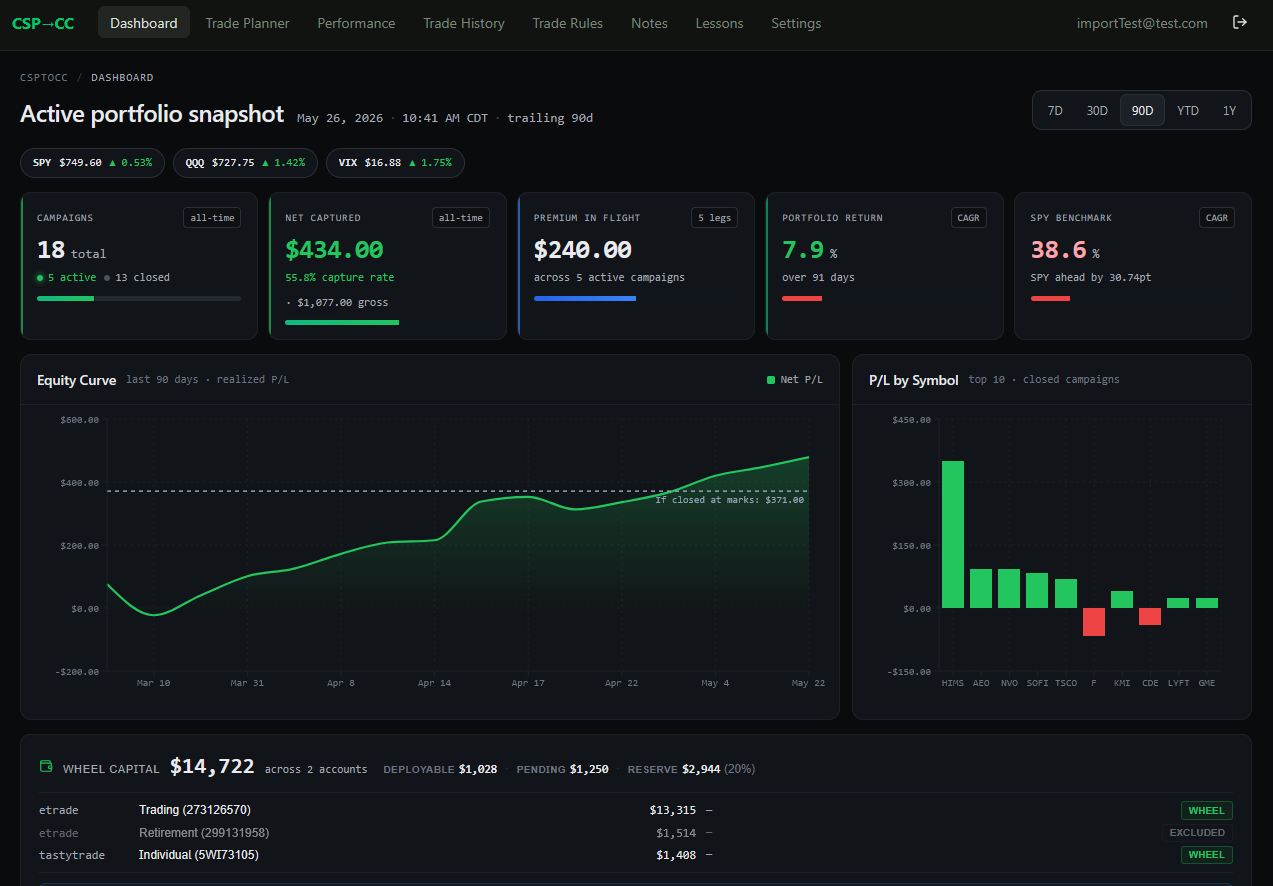
Every wheel guide tells you what to do. None of them tell you whether your specific account is winning the comparison that actually matters. CSPtoCC computes your portfolio return using the same window, the same start date, the same dollars — and puts SPY's return next to it. Same period, same method, no asterisks.
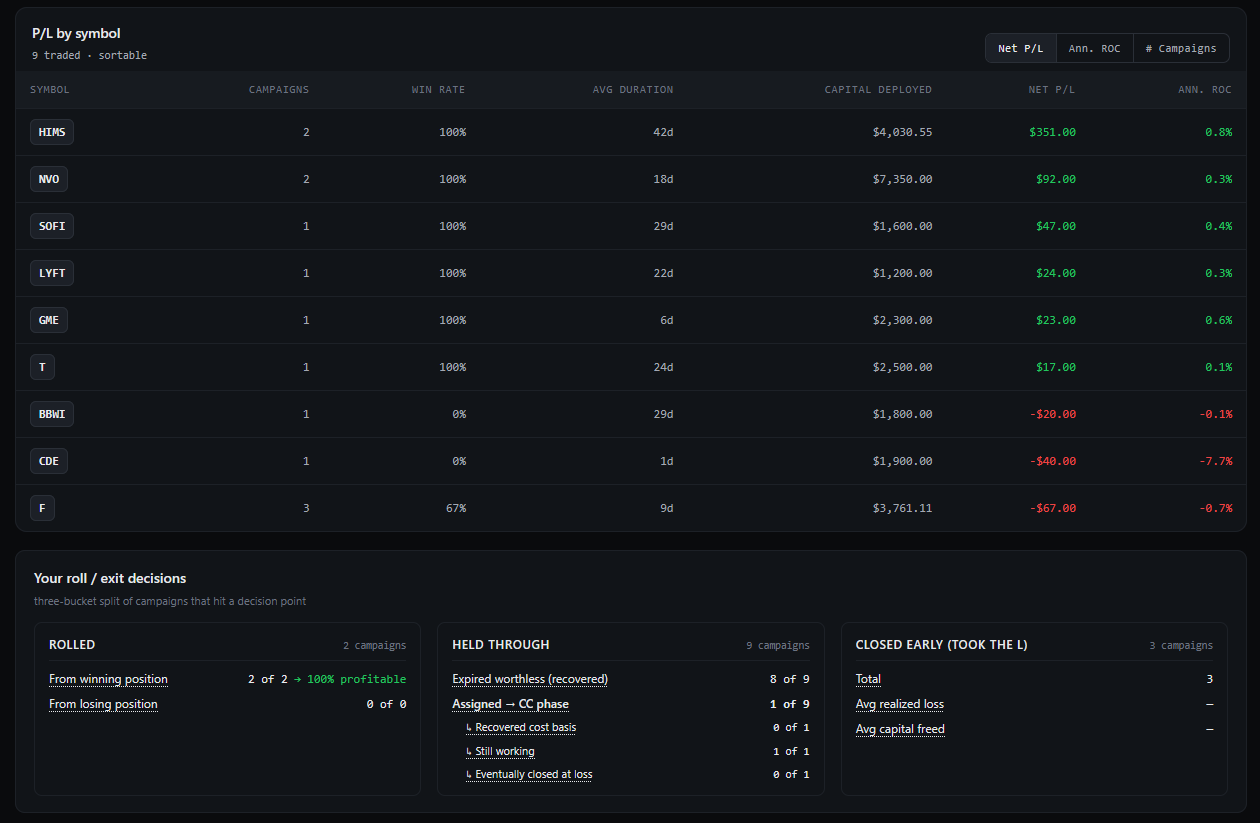
Every closed campaign hit a decision point — you rolled it, you held it through, or you closed early and took the loss. Most tools collapse that into "win rate." CSPtoCC splits it into three buckets so you can see which of YOUR decisions paid and which didn't. The held-through bucket sub-splits by expired-worthless vs assigned, and by whether the assignment recovered cost basis. No other wheel tool does this.
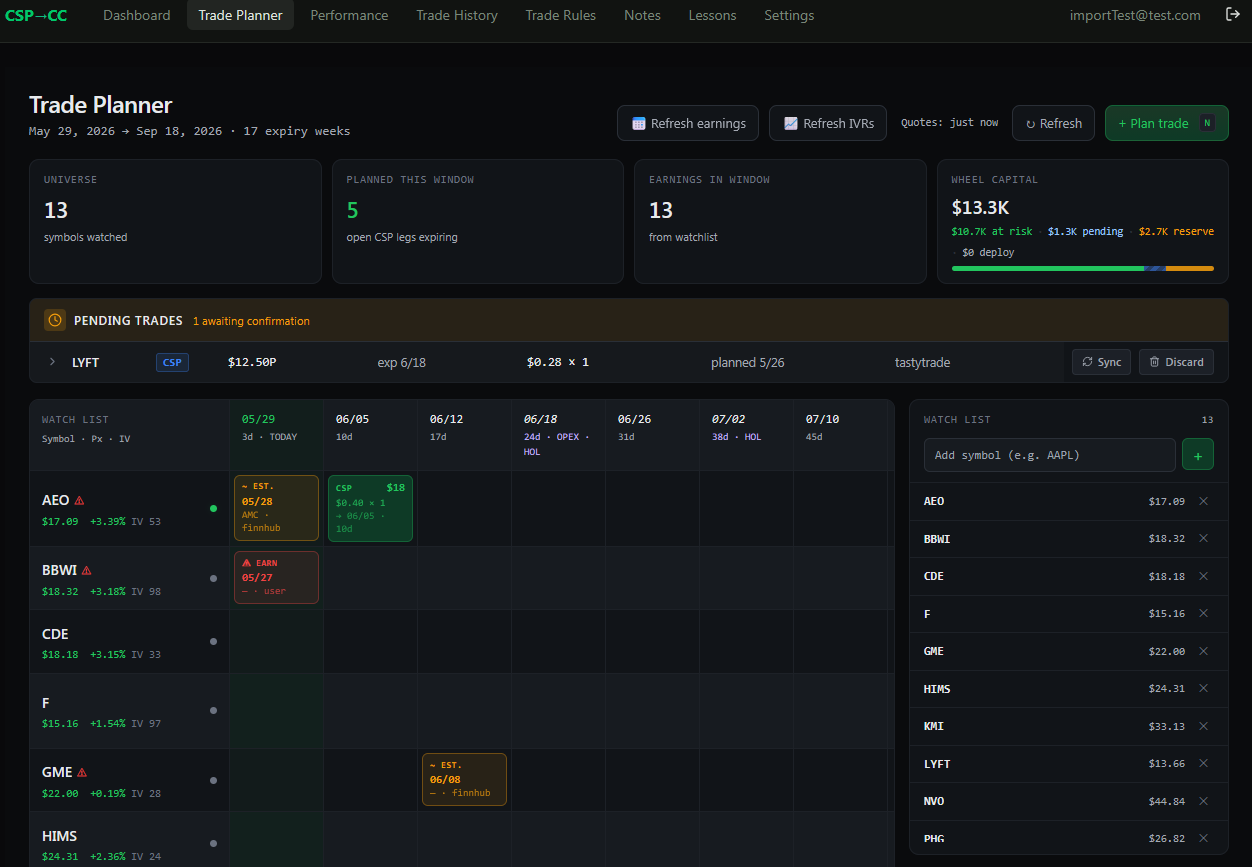
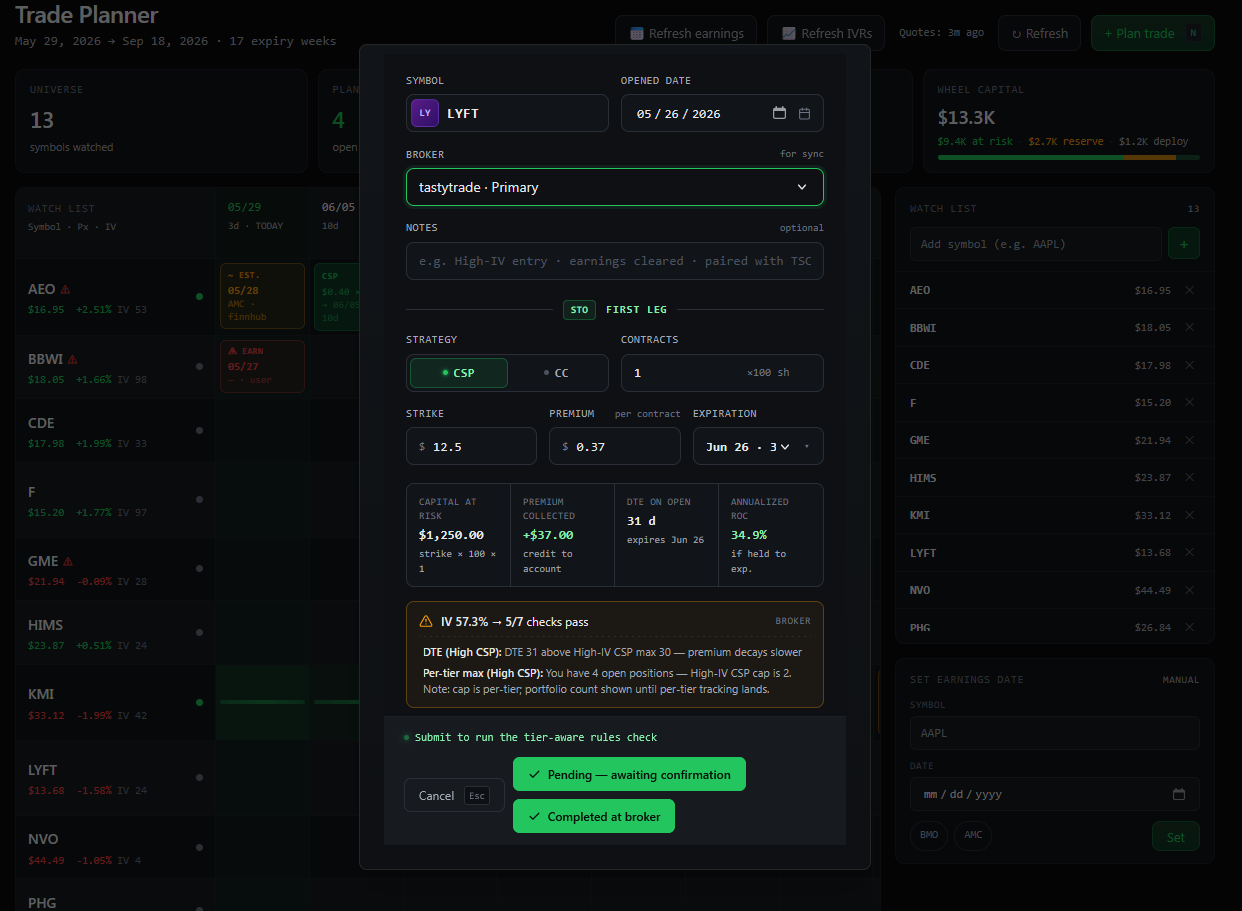
You opened 5 positions this week. 3 of them have earnings in the same expiry week. You don't know that yet. The Planning Board lays your full watchlist against 17 expiry weeks, marks every earnings date (broker API → 91-day estimate → user confirmation), and shows every open CSP campaign in its expiry column. The pile-up is visible before you click "Plan trade."
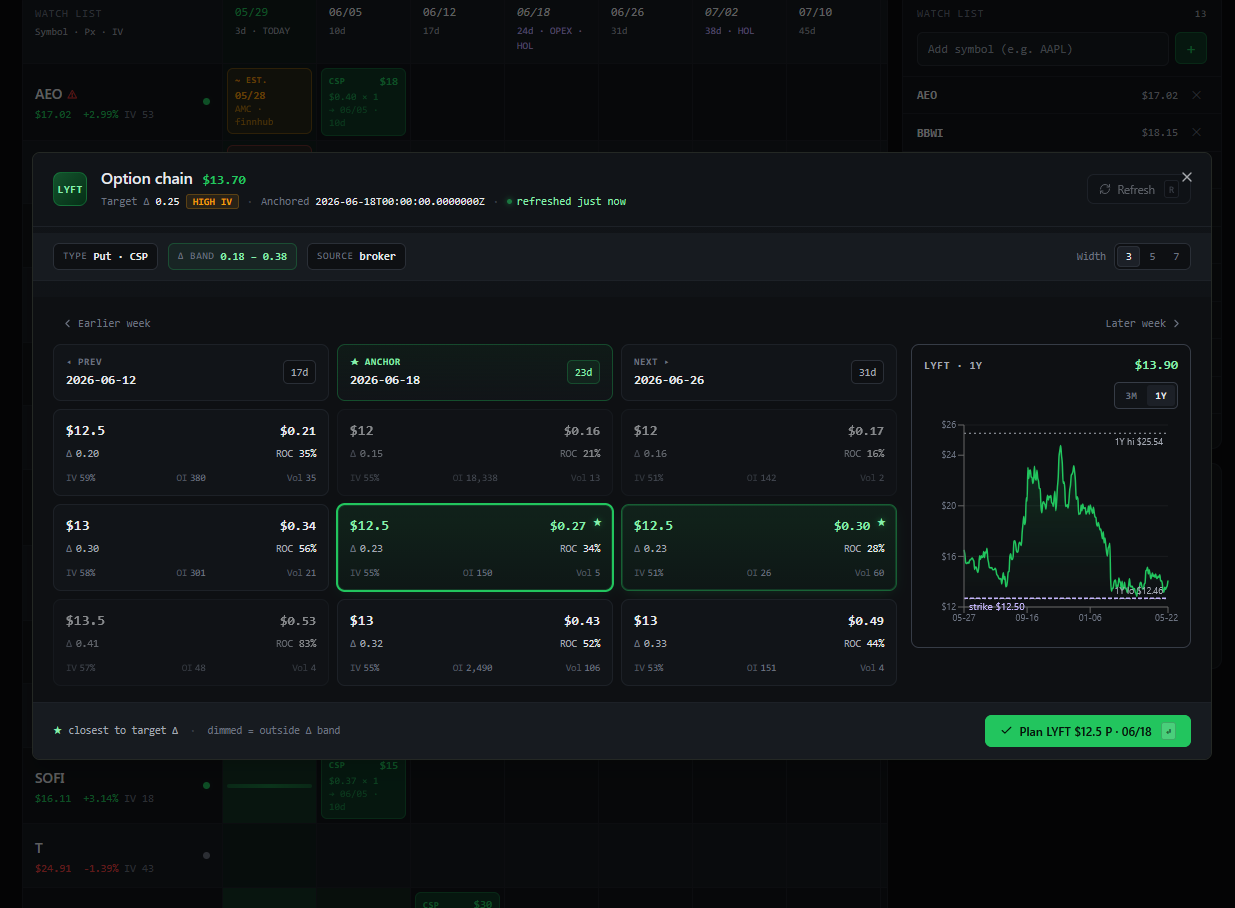
Click a symbol on the Planning Board — a chain drawer opens with three consecutive expiries side-by-side, strikes filtered to your delta band, annualized ROC per cell, IV%, OI, Volume. A 1-year price chart on the side shows where the underlying has actually traded. Pick a tile, "Plan trade" pre-fills the entry dialog. Replaces three browser tabs with one read.
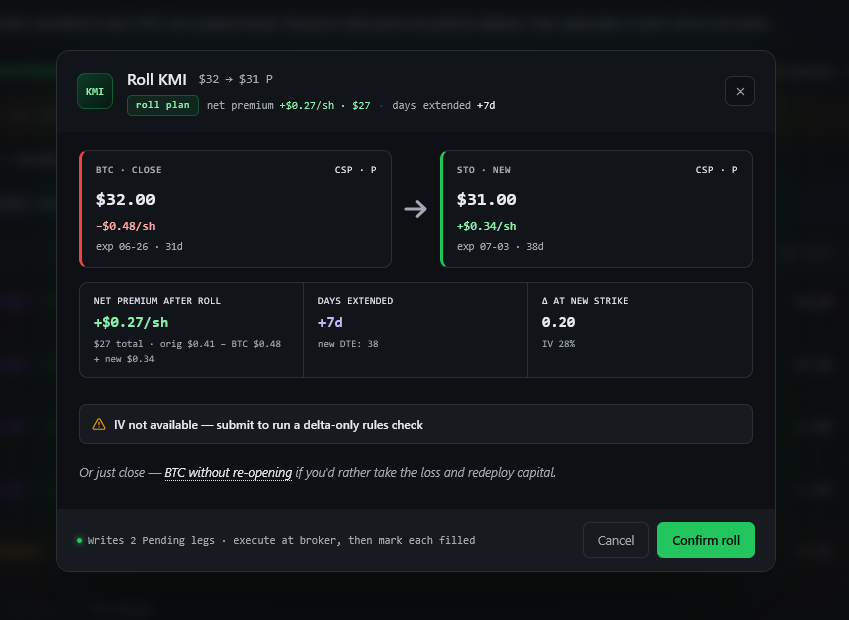
When a position needs defense, the math is solvable. Pick a side (roll-down-out / roll-up-out / roll-out), enforce your delta band, require positive net credit, prefer 1σ OTM on ITM rolls. Smart Roll runs that solver against the live chain and surfaces the BTC + new STO pair with the math already done. Confirm writes two Pending legs you mark filled at the broker.
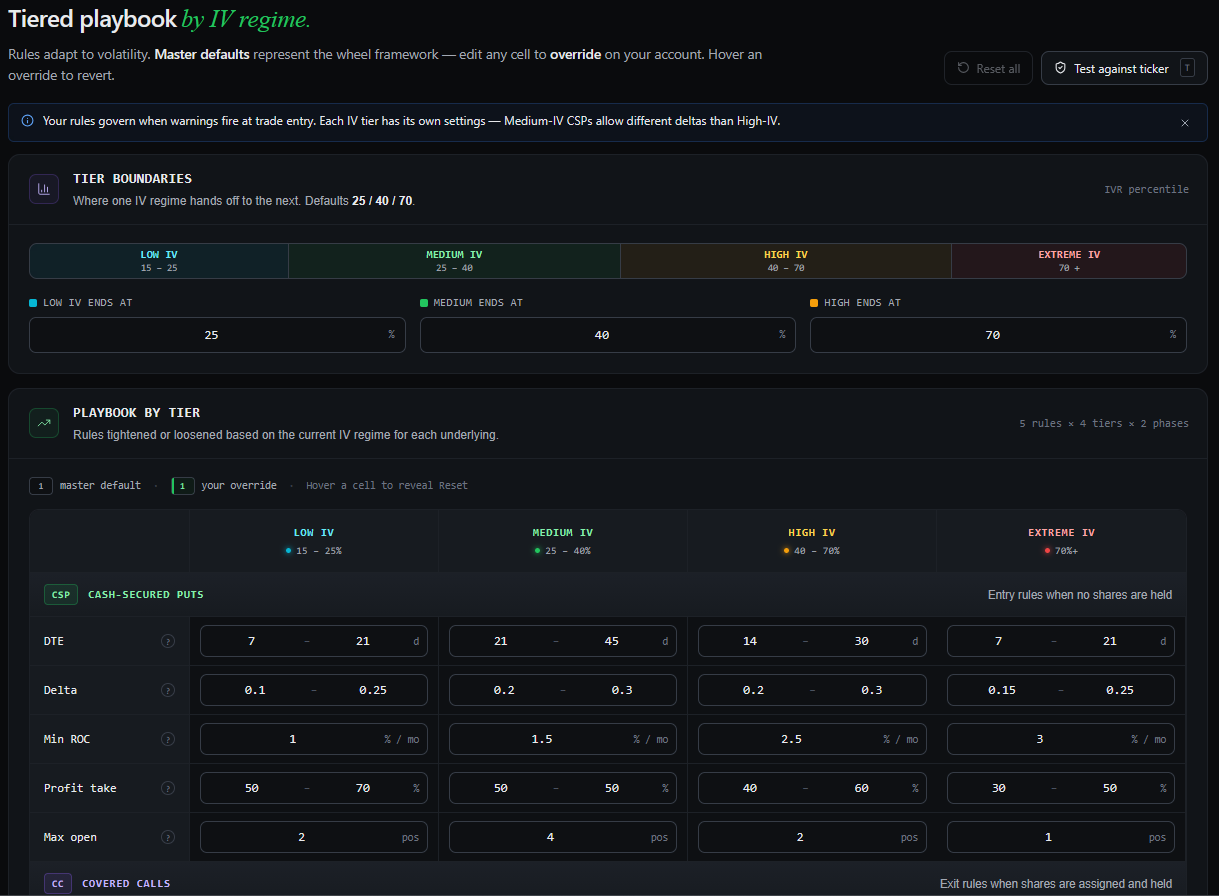
One static rule set across all IV regimes is a lie. Selling 0.30 delta puts in 15% IV is reckless; doing it in 75% IV is responsible. CSPtoCC ships master defaults for four IV tiers (Low / Medium / High / Extreme) across both phases (CSP / CC). Every cell is editable; your overrides save per-account and live alongside the master defaults. The validator picks the right tier automatically based on the symbol's current IV rank.
You already know your rules. The validator runs them every time you enter a trade so willpower doesn't have to. The dialog shows live as you type — strike, expiry, contracts, IV — and tells you which checks pass and which don't. Tier-aware: a check that passes in High-IV mode fails in Extreme-IV. Warnings are overrideable; the override gets journaled so you can review your patterns later.
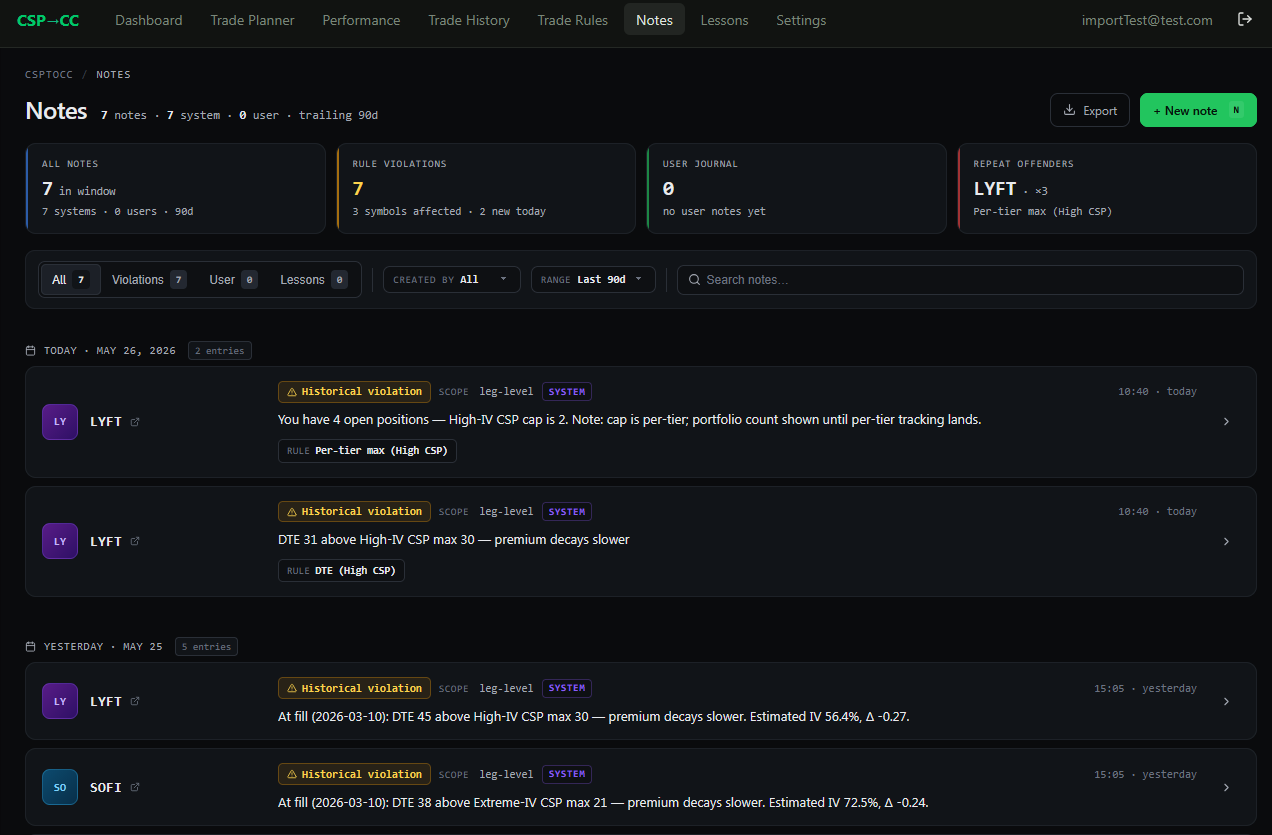
Every rule override gets a note. Every historical violation surfaced after a Polygon backfill gets a note. The Notes page rolls them up by symbol, by rule, by date. The "repeat offenders" tile calls out the rule you violate most often — and which symbol you most often violate it on. Add your own freeform notes alongside the auto-journal entries. Patterns surface whether you want them to or not.
No VC. No growth team. One person running CSPs on a real account, a real day job, and a deep frustration with every "trade journal" that treats a roll like a brand new trade.
The campaign model came from a CDE trade that lost $40 in 24 hours during an earnings cluster. The decay visual came from staring at a 7-DTE position and not knowing whether to close. Every feature traces back to a moment.
"Every trade journal I tried treated a roll like a brand new trade. After three rolls I had no idea what my real breakeven was. So I stopped using them and built the thing I wished existed."
Free forever — not a 14-day trial, not invite-only, not "we'll let you in eventually." Log your wheel trades manually, run the Planning Board on your own watchlist, see your decay states live. Pro is when broker sync, unlimited campaigns, and the chain grid become worth $29 a month — and you'll know exactly when that is.
Run the campaign model, see the decay visual, plan around earnings. Imported history grandfathered — no surprise downgrades.
Portfolio Return vs SPY, Smart Roll, Decision Outcomes, continuous broker sync, the full chain grid, tiered rules, unlimited campaigns.
Same as Pro, but you help shape the roadmap and you keep the price forever.
Founding 50 seats at $19/mo locked for life. Beta opens December 2026.